Watercolor painting has a way of surprising you — sometimes beautifully, sometimes frustratingly. And more often than not, the paper you choose has more to do with that outcome than the paint itself. Many beginners assume all watercolor paper is more or less the same, only to discover that the wrong surface can cause colors to bleed uncontrollably, buckle badly, or refuse to hold a wash evenly. Choosing the right paper isn’t just a technical detail — it genuinely shapes the experience and the final result.
This guide breaks down the different types of watercolor paper, from surface textures and weight categories to material composition and format options. Whether you’re just starting out or looking to refine your supply choices, understanding what sets each type apart will help you make more intentional decisions at the art store.
Why Watercolor Paper Matters More Than You Might Think
Regular printer paper or even sketchbook paper simply can’t handle the amount of water involved in watercolor painting. It warps, tears, and causes colors to look dull and flat. Watercolor paper, by contrast, is specially engineered to absorb and release water in a controlled way, allowing pigment to settle evenly and dry with the vibrancy it deserves.
The differences between paper types aren’t subtle. A rough-textured sheet will produce completely different results than a smooth one, even when used with the exact same paints and brushes. Paper weight affects how much buckling occurs. Composition affects longevity, brightness, and how well the paper accepts layering. These are real, practical distinctions worth knowing.
The Three Main Surface Textures
Surface texture — also called the “tooth” of the paper — is one of the first things artists learn to consider. There are three standard categories, each suited to different techniques and styles.
Hot Press (HP): Smooth and Precise
Hot press paper is made by running the paper through heated rollers, which results in a very smooth, almost hard surface. There’s very little texture to speak of, which makes it ideal for detailed work, fine lines, and illustrations that require precision.
Watercolor behaves differently on hot press — it tends to pool and move more freely, which can be either an advantage or a challenge depending on your technique. Wet-on-wet blending can produce stunning gradients, but controlling edges requires more skill because the paint doesn’t grip as readily. Many botanical illustrators and pen-and-wash artists prefer hot press for this reason.
It’s worth noting that hot press paper is often less forgiving for beginners, since mistakes are harder to lift and the paint doesn’t settle as predictably.
Cold Press (CP): The Versatile Middle Ground
Cold press paper is by far the most commonly used surface among watercolor artists, from beginners to professionals. It’s made without heat, resulting in a slightly textured surface that provides enough tooth to hold pigment well while still allowing for smooth washes.
The texture on cold press is moderate — not so rough that it dominates your work, and not so smooth that the paint slips around. It handles wet-on-wet, wet-on-dry, glazing, and layering with relative ease, which is why it’s considered the most versatile choice. If you’re unsure where to start, cold press is almost always a safe bet.
Rough: Texture-Forward Results
Rough watercolor paper has the most pronounced surface texture of the three. When a brush skims across it, the paint catches on the peaks and skips over the valleys, creating a naturally granulated, textured look that’s difficult to replicate on smoother surfaces.

This quality is particularly well-suited to landscapes, seascapes, and expressive work where a sense of energy or movement is desirable. However, it’s not ideal for fine detail — the uneven surface makes precision difficult. Many experienced artists love rough paper for loose, gestural painting, but it does have a learning curve. Artists drawn to this expressive, texture-driven approach may also find inspiration in the history of abstract art, where texture and spontaneity play a central role.
Understanding Paper Weight
Paper weight is measured in pounds (lb) or grams per square meter (gsm), and it has a direct impact on how the paper handles water. Heavier paper absorbs more moisture without warping or buckling as severely.
- 90 lb (190 gsm): The lightest commonly available watercolor paper. It’s affordable and works well for practice or sketching, but it will buckle significantly with heavy washes unless stretched or taped down first.
- 140 lb (300 gsm): The most popular weight among watercolor artists. It handles moderate to heavy washes without too much warping, especially when taped to a board. This is often recommended as the go-to weight for regular use.
- 300 lb (640 gsm): This heavy-duty paper is thick enough that it rarely needs stretching. It behaves almost like a board and can handle very wet techniques, repeated lifting, and aggressive reworking. It’s considerably more expensive, but for finished pieces or demanding techniques, many artists find it worth the investment.
A common practice for working with lighter papers is stretching — soaking the paper in water, then taping or stapling it to a board and allowing it to dry completely before painting. This pre-buckles the paper so it lies flat during painting.
Cotton vs. Wood Pulp: What the Paper Is Made Of
The composition of watercolor paper significantly affects its durability, brightness, and how it responds to water and pigment over time.
Cotton (Rag) Paper
High-quality watercolor paper is made from cotton fibers, sometimes referred to as “rag” paper. Cotton paper is highly absorbent, durable, and acid-free, meaning it won’t yellow or degrade over time. The texture it develops from its fibers also contributes to how paint behaves on its surface — often resulting in more luminous, vibrant colors.
Brands like Arches, Fabriano Artistico, and Strathmore 500 Series are made from 100% cotton and are widely regarded as professional-grade options. Cotton paper is the choice for artwork intended to last, be framed, or be sold.
Wood Pulp (Cellulose) Paper
More affordable watercolor papers are made from wood pulp or cellulose. These papers are still significantly better than regular paper for watercolor work, but they don’t perform quite as well as cotton alternatives. Colors may appear slightly less vibrant, the paper may buckle more easily, and they’re less forgiving when it comes to lifting and reworking paint.
That said, cellulose papers are perfectly suitable for practice, studies, and beginner use. Brands like Canson and Strathmore 300 Series offer good quality at an accessible price point, making them popular starting options.
Format Options: Pads, Blocks, Loose Sheets, and Rolls
Watercolor paper comes in several different formats, each with practical pros and cons depending on how and where you like to work.
Watercolor Pads
Pads are the most familiar format — sheets glued or spirally bound together. They’re convenient and easy to transport, but the individual sheets usually need to be taped down to prevent buckling. Pads are a solid choice for regular practice and studio use.

Watercolor Blocks
A watercolor block looks like a thick pad, but the sheets are glued on all four sides. This keeps the paper under tension while you paint, reducing warping significantly without the need for stretching or taping. Once your painting is dry, you slide a palette knife or letter opener between the top sheet and the next to release it. Blocks are popular for plein air painting because they’re self-contained and easy to use on location.
Loose Sheets
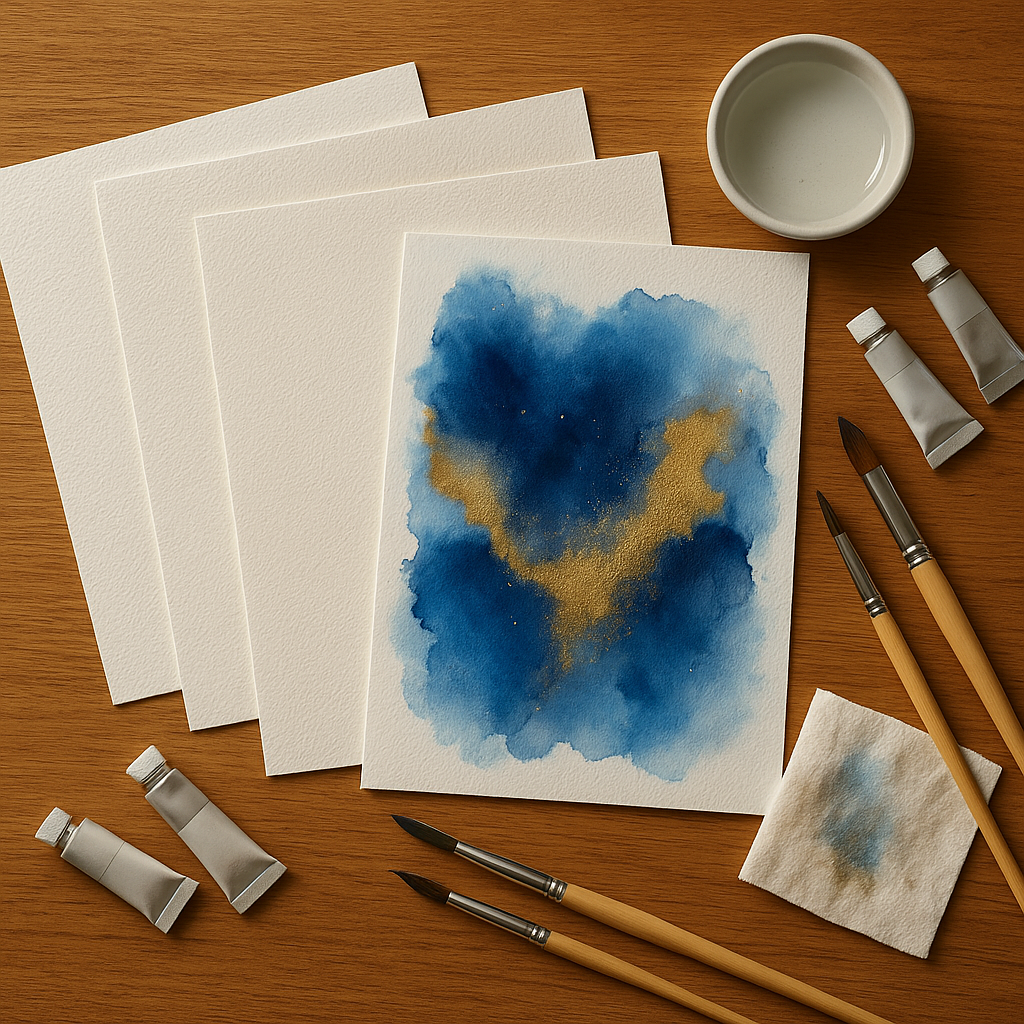
Individual sheets offer more flexibility in terms of size and are often available in larger dimensions than pads. Many artists buy full-size sheets (typically 22 x 30 inches) and cut them to the dimensions they need. This can be more economical when working at scale.
Rolls
Watercolor paper rolls are less common but exist for artists working on large-scale pieces. They allow custom sizing and are especially useful for murals or oversized compositions.
Choosing the Right Paper for Your Style
There’s no single best watercolor paper — it really depends on what you’re trying to achieve. Here are some general guidelines to help narrow it down:
- For beginners: A 140 lb cold press pad made from cotton or quality cellulose is the most practical starting point. It’s forgiving, versatile, and available at most art supply stores.
- For detailed illustration or botanical work: Hot press paper in 140 lb or heavier is worth exploring, as the smooth surface supports fine line work and precise detail.
- For loose, expressive painting: Rough paper in 140 lb or 300 lb allows the texture itself to contribute to the composition, especially for landscapes and nature scenes.
- For finished, archival-quality work: 100% cotton paper in 140 lb or 300 lb will produce the most vibrant, lasting results and best supports techniques like lifting, scrubbing, and multiple glazing layers.
- For painting outdoors: A watercolor block in cold press is particularly practical — no taping required, compact, and easy to work with in the field.
It’s also worth experimenting. Many artists keep a few different paper types on hand and choose based on the specific piece they’re working on. Sampling paper — buying a few individual sheets from different brands and surfaces before committing to a full pad — is a common and highly recommended practice. If you also work digitally, learning how to edit and enhance images in Photoshop can be a great way to refine scans of your watercolor work.
A Note on Paper Size: What About A4?
A4 (8.27 x 11.69 inches) is a standard size that many artists find convenient, especially those who enjoy smaller studies, daily practice paintings, or working in a journal-style format. Several brands offer A4 watercolor pads in various weights and surfaces. It’s a practical size for beginners because it doesn’t demand as much paint or water as larger formats, making it easier to manage while developing technique.
Conclusion
Watercolor paper is far more than a passive surface — it’s an active participant in how a painting turns out. The texture you choose shapes the character of your marks. The weight determines how the paper handles moisture. The composition affects color brightness and longevity. And the format influences how and where you work.
Understanding these distinctions — hot press versus cold press versus rough, cotton versus cellulose, 90 lb versus 300 lb — gives artists the knowledge to make deliberate choices rather than guessing at the art store. Start with a versatile option like 140 lb cold press cotton paper, experiment as your practice grows, and pay attention to how different surfaces respond to your techniques. Over time, those choices become second nature — and your results will reflect it.