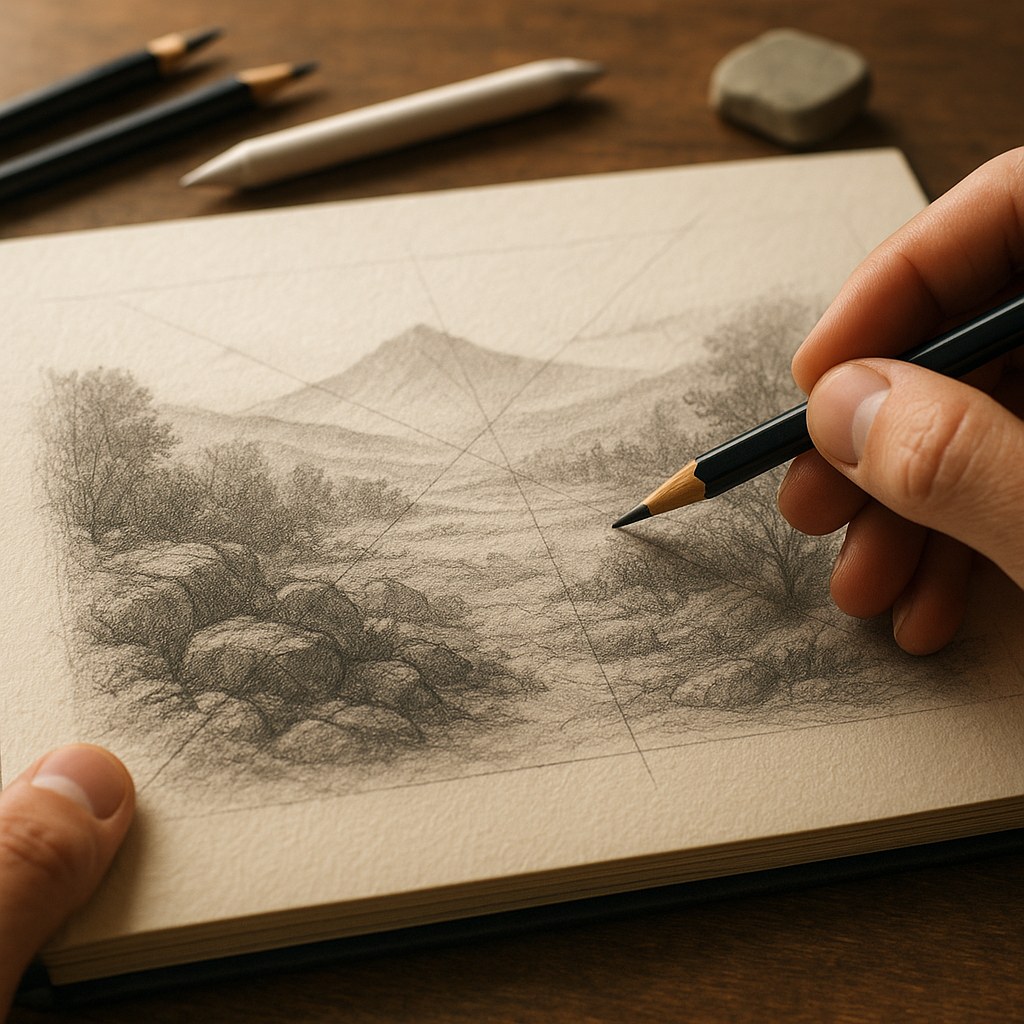
Ever wondered why some landscape drawings seem to pull you right into the scene, while others fall flat? The secret lies in perspective. Mastering perspective in landscape drawing transforms a simple sketch into a window to another world, creating depth and visual realism that captivates viewers.
Whether you’re a beginner picking up a pencil for the first time or an experienced artist looking to refine your skills, understanding perspective is crucial. It’s not just about following rules; it’s about learning to see the world differently and translating that vision onto paper.
Understanding Perspective: More Than Meets the Eye
Perspective in art is a technique for depicting three-dimensional space on a two-dimensional surface. It’s the artist’s way of mimicking how our eyes perceive depth in the real world. But why do artists use perspective in their drawings? Simply put, perspective adds realism, depth, and a sense of space to artwork, making it more engaging and lifelike.
The concept of perspective isn’t new. It was formalized during the Renaissance by artists like Filippo Brunelleschi and Leonardo da Vinci. However, its principles are rooted in how we naturally see the world around us.
The Building Blocks of Perspective
To grasp perspective in landscape drawing, you need to understand a few key elements:
- Horizon Line: This is where the sky appears to meet the earth. It’s also where the viewer’s eye level is.
- Vanishing Point: The point on the horizon line where parallel lines seem to converge.
- Orthogonal Lines: Lines that appear to recede towards the vanishing point.
These elements work together to create the illusion of depth. For example, a road that seems to narrow as it stretches into the distance, or buildings that appear smaller the farther away they are.
Types of Perspective in Landscape Drawing
Artists use different types of perspective depending on the scene they’re depicting and the effect they want to achieve. Let’s explore the three main types:
One-Point Perspective
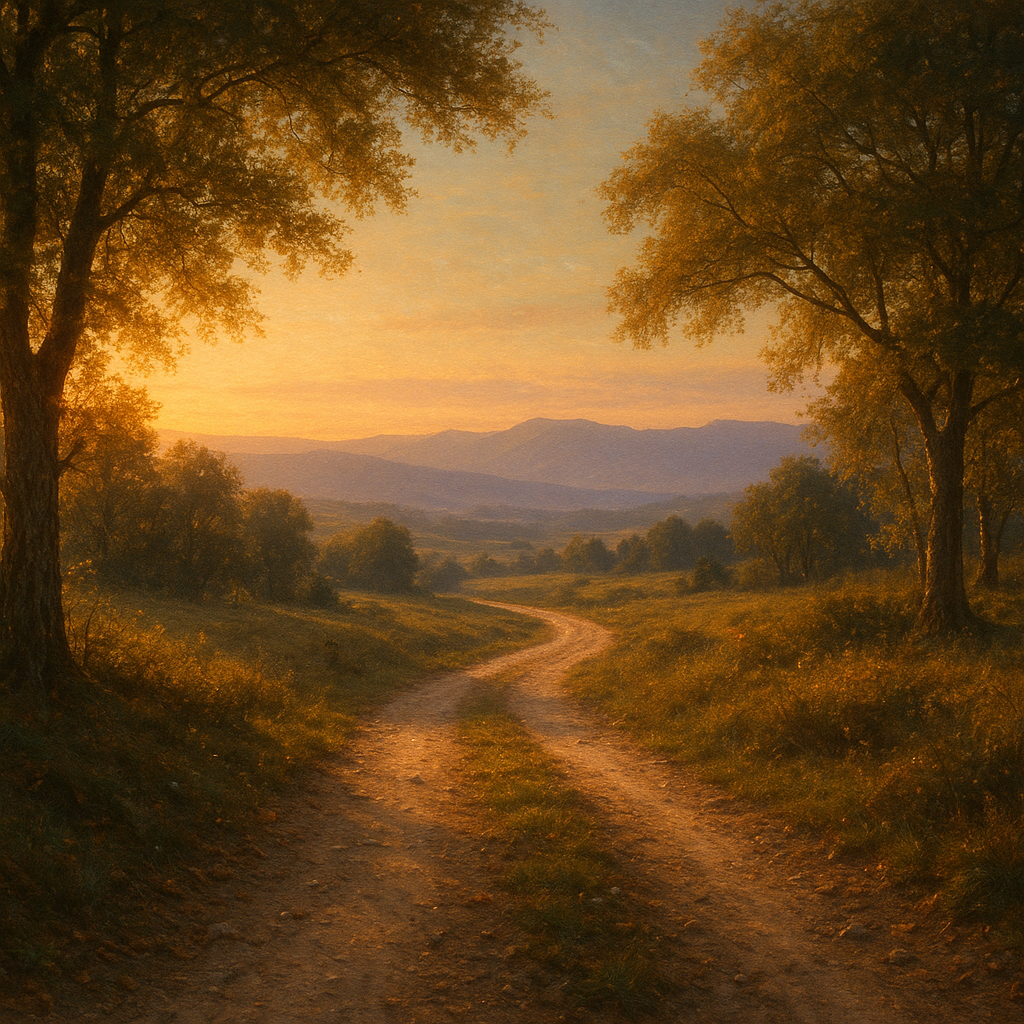
One-point perspective is the simplest form and a great starting point for beginners. It’s used when the subject is viewed head-on, with one face parallel to the picture plane. Think of a long, straight road disappearing into the distance.
In one-point perspective:
- All lines converge at a single point on the horizon line
- It’s ideal for drawing roads, railways, or long hallways
- Objects appear to get smaller as they recede into the distance
Two-Point Perspective
Two-point perspective comes into play when you’re viewing an object from a corner. It’s commonly used in landscape drawing to depict buildings or other structures with depth.
Key features of two-point perspective include:
- Two vanishing points on the horizon line
- Vertical lines remain vertical, but horizontal lines converge towards the vanishing points
- It creates a more dynamic and realistic representation of three-dimensional objects
Three-Point Perspective
Three-point perspective adds another dimension, quite literally. It’s used when viewing objects from above or below, adding a vertical vanishing point to the mix.
This type of perspective is often used for:
- Dramatic cityscapes viewed from a high vantage point
- Tall buildings seen from the ground looking up
- Creating a sense of awe or unease in the viewer
The Horizon Line: Your Perspective Anchor
What is the horizon line in art? It’s a crucial element in perspective drawing, representing the viewer’s eye level. The position of the horizon line can dramatically change the mood and composition of your landscape.
Consider these effects of horizon line placement:
- High horizon line: Emphasizes the land or foreground, making the viewer feel like they’re looking down on the scene
- Low horizon line: Highlights the sky, creating a sense of openness and grandeur
- Middle horizon line: Provides balance but can be less dynamic
Experimenting with horizon line placement can add drama and interest to your landscape drawings. Don’t be afraid to break the “rule of thirds” if it serves your artistic vision.
Atmospheric Perspective: Painting the Air
While linear perspective deals with lines and geometry, atmospheric (or aerial) perspective focuses on how the atmosphere affects our perception of distant objects. This technique is crucial for creating realistic landscapes.
Key principles of atmospheric perspective include:
- Objects become less distinct and detailed as they recede into the distance
- Colors become cooler and less saturated with distance
- Contrast decreases for faraway elements
The 70/30 rule in painting relates to this concept. It suggests that about 70% of your painting should be dedicated to the foreground and middle ground, with only 30% for the background. This helps maintain a sense of depth and prevents the distant elements from competing with the closer ones for attention.
Perspective in Action: Practical Tips for Landscape Drawing
Now that we’ve covered the theory, let’s look at some practical ways to apply perspective in your landscape drawings:
1. Start with a Horizon Line
Begin every landscape drawing by establishing your horizon line. This will anchor your entire composition and guide the placement of all other elements.
2. Use Reference Photos
Study photographs of landscapes to see how perspective works in the real world. Try to identify the horizon line, vanishing points, and how objects diminish in size with distance.
3. Practice Basic Shapes in Perspective
Before tackling complex landscapes, practice drawing simple shapes like boxes and cylinders in perspective. This will help you understand how forms change as they move away from the viewer.
4. Overlap Objects
Placing objects in front of others is a simple yet effective way to create depth in your drawings. This technique, combined with size variation, can greatly enhance the sense of perspective.
5. Vary Line Weight
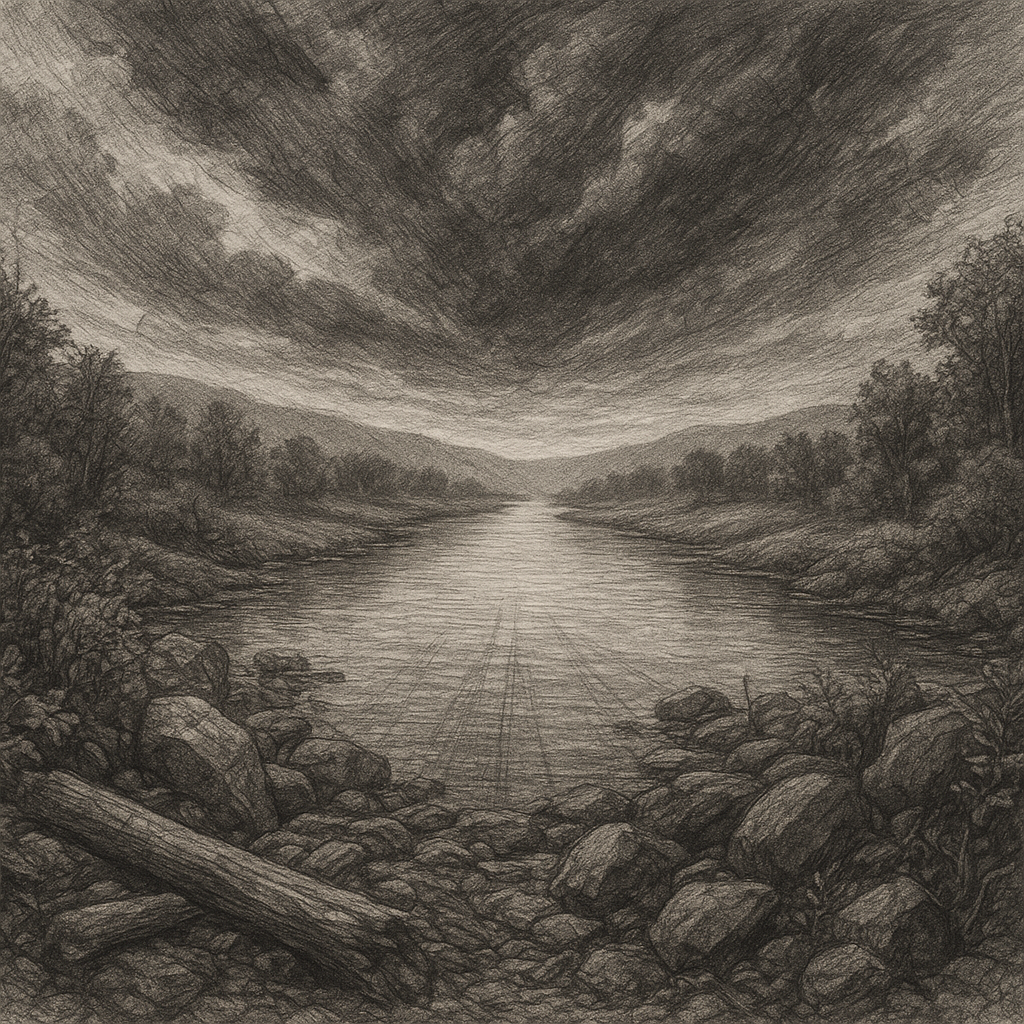
Use stronger, darker lines for foreground elements and lighter, thinner lines for distant objects. This mimics how our eyes perceive detail at different distances.
6. Don’t Forget the Middle Ground
Many beginners focus on the foreground and background, neglecting the middle ground. This area is crucial for creating a smooth transition and enhancing the sense of depth.
Perspective Beyond the Page: Life Lessons from Art
Why is perspective important in life? The principles of perspective in art can teach us valuable lessons about perception and understanding in our daily lives:
- Multiple viewpoints: Just as a scene can look different from various angles, situations in life can be perceived differently by different people.
- Context matters: The position of the horizon line in art is like the context in real life – it can dramatically change how we interpret a situation.
- Details fade with distance: In both art and life, it’s often necessary to step back and see the bigger picture, letting go of minor details.
- Convergence of ideas: Like parallel lines meeting at a vanishing point, diverse ideas can come together to create a unified vision.
By understanding and applying perspective in art, we can develop a more nuanced and empathetic view of the world around us.
Teaching Perspective: From Primary School to Professional Art
What is landscape drawing for primary 2 students? At this level, it’s about introducing basic concepts of space and depth in a fun, accessible way. Teachers might use simple one-point perspective exercises, like drawing a road with trees on either side, to help young students grasp the idea that objects appear smaller as they get farther away.
As artists progress, they can explore more complex perspective techniques. Professional landscape artists often combine multiple perspective types, along with atmospheric effects, to create rich, immersive scenes that transport viewers into the artwork.
Embracing Technology: Digital Tools for Perspective Drawing
While traditional drawing skills remain crucial, digital tools have opened up new possibilities for creating perspective in landscape art:
- Perspective grids: Many digital art programs offer customizable perspective grids, making it easier to maintain consistent perspective throughout a drawing.
- 3D modeling: Artists can create simple 3D models of landscapes to use as reference, ensuring accurate perspective from any angle.
- Augmented reality: Some apps allow artists to overlay perspective guides on real-world scenes, helping them visualize and capture perspective in plein air drawing.
These tools can be valuable aids, but they shouldn’t replace a solid understanding of perspective principles. The most compelling digital landscapes still rely on the artist’s knowledge and skill in applying perspective.
Conclusion: Seeing the World Through an Artist’s Eyes
Mastering perspective in landscape drawing is a journey that can transform not only your art but also how you perceive the world around you. From the basic principles of horizon lines and vanishing points to the nuanced application of atmospheric perspective, these techniques allow artists to create depth and visual realism that captivate viewers.
Remember, perspective is both a science and an art. While understanding the rules is important, don’t be afraid to bend them for creative effect. The most striking landscapes often come from artists who know the rules well enough to break them purposefully.
Whether you’re sketching a simple countryside scene or crafting a complex cityscape, keep exploring and experimenting with perspective. With practice and patience, you’ll find yourself creating landscapes that don’t just represent a view, but invite viewers to step into a whole new world.